Trauma Therapy in Westlake Village
Trauma Therapy in Westlake Village with Julie Klamon, LMFT
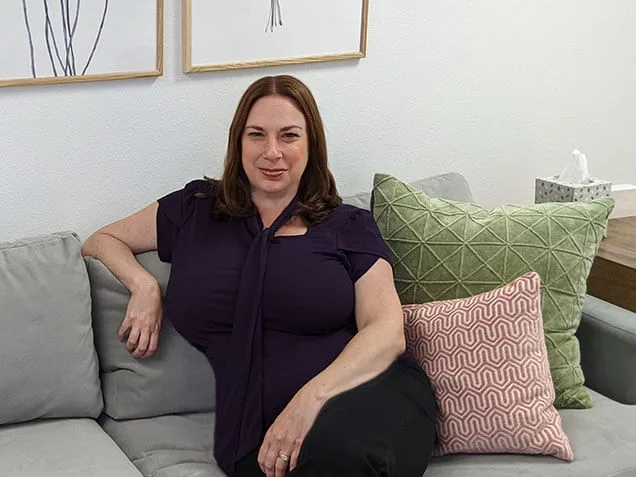
Trauma has a way of staying with you long after the event is over. A car accident, an assault, the sudden loss of someone you love, a frightening medical episode, or something from childhood that you have never fully put down. Many people carry experiences like these quietly while trying to keep up with everything else. Trauma therapy is about what is left over after the event: the part that still hijacks your sleep, your focus, and your sense of safety.
Over more than 20 years of clinical work I have sat with trauma in many forms. I spent over a decade at a Los Angeles agency supporting children recovering from sexual trauma, and I am a certified counselor through the UCLA Rape Treatment Center. That depth of experience means I will not flinch at what you tell me. Whatever you have been through, we can work with it, using approaches like trauma-focused CBT, mindfulness, somatic work, and grounding skills.
My office in Agoura Hills is about 5 to 10 minutes from Westlake Village on the 101. I also offer secure video sessions to anyone in California.
Trauma Therapy for the Westlake Village Community
One thing I see often is how easy it is to keep functioning after something traumatic and assume that means you are fine. People go back to work, keep the household running, and look composed, while underneath they are not sleeping, not feeling safe, and bracing for the next bad thing. Trauma does not care how put-together your life looks. It lives in the nervous system, and it does not resolve on its own just because you are busy.
There is also the matter of privacy in a close community where you tend to see familiar faces around town. It can feel risky to seek help close to home. My Agoura Hills office sits just outside Westlake Village, which gives clients a degree of separation that matters when the material is this personal. For some people, virtual sessions from their own home feel even safer, and that option is always available.
How Trauma Shows Up
Trauma can follow many kinds of experiences, including accidents, assault, physical or sexual abuse, neglect, bullying, witnessing violence, a serious injury, or the unexpected death of someone close to you. What ties them together is not the event itself but the way it overwhelms your ability to cope in the moment. Afterward, your nervous system can stay locked in a mode that keeps scanning for danger. That often looks like:
- Intrusive thoughts or flashbacks
- Trouble sleeping, or sleeping too much
- Difficulty concentrating or making decisions
- Irritability or sudden anger
- Hypervigilance and trouble feeling safe
- Avoiding places or activities that bring the memory back
- Emotional numbness or difficulty trusting people
If you recognize yourself in this list, it does not mean you are broken. It means your system is still responding to something it never got to finish processing.
My Approach to Trauma Therapy
Trauma changes the way your brain and body respond to the world, so trauma therapy works at that level rather than just talking through the story. My focus is on helping your nervous system settle back toward a baseline where you can think clearly, feel present, and stop reacting to threats that are no longer there. Some clients do this work one-on-one in individual therapy. When trauma has affected the whole household, family therapy can help family members understand its impact and support one another through recovery. You can read more about my general approach on my trauma therapy page.
We go at your pace. Trauma work is not about reliving the worst moments of your life. It is about reducing the power those moments hold over you right now. Some clients need to talk through what happened in detail. Others need to work more on their physical responses and day-to-day coping. I follow your lead and adjust as we go, and over time most people feel relief, steadier relationships, and a sense of self-worth that the trauma had eroded.
Who I Work With
Children (8+)
Teens
Adults
Seniors
Frequently Asked Questions About Trauma Therapy in Westlake Village
What types of trauma do you treat?
I work with people who have lived through a wide range of overwhelming experiences, including accidents, assault, childhood abuse, domestic violence, the sudden loss of a loved one, medical trauma, and frightening or violent events. I treat both single-incident trauma and the kind that builds up over years. We shape the work around what you actually went through and how it is affecting you now.
How is trauma therapy different from regular talk therapy?
Trauma therapy is designed to address the way overwhelming experiences get stored in the brain and body. After a traumatic event, your nervous system can get stuck in a state of high alert that affects everything from your sleep to your relationships. Rather than only talking about what happened, trauma work addresses those responses directly, using approaches such as trauma-focused CBT, mindfulness, somatic work, and grounding skills. The goal is to loosen the grip the experience has on you so you can feel like yourself again.
It has been a long time since the event. Is it too late to get help?
It is never too late. Trauma does not follow a timeline. Many people push through the immediate aftermath and only later realize they are still carrying the effects. Nightmares, hypervigilance, trouble feeling safe, and emotional numbness can all signal that unresolved trauma is still active. Therapy can help even years after the original experience.
Do you provide trauma therapy for children and teens from Westlake Village?
Yes. I work with children ages 8 and up, as well as teens. Children process trauma differently than adults, and their distress often shows up as behavioral changes, regression, clinginess, or trouble at school. I use age-appropriate methods to help them make sense of what happened and rebuild a sense of safety, and I bring parents into the work when it helps.
How far is your office from Westlake Village, and do you offer virtual sessions?
My Agoura Hills office is about 5 to 10 minutes from Westlake Village on the 101. I also offer secure video sessions to anyone located in California. Many clients prefer virtual sessions for trauma work because it lets them stay in a familiar, comfortable space during what can be intense conversations.
In-Person and Virtual Trauma Therapy Near Westlake Village
My office in Agoura Hills, CA 91301 is a short drive from Westlake Village for in-person trauma therapy. I also see clients from nearby communities, including Thousand Oaks, CA, Agoura Hills, CA, Oak Park, CA, Calabasas, CA, and Woodland Hills, CA. Virtual sessions are available to anyone located anywhere in California.
You do not have to keep carrying this on your own. Schedule a free phone consultation and we can talk about what happened and how I might help.
More Support in Westlake Village
- Anxiety Therapy in Westlake Village
- Child Therapy in Westlake Village
- Co-Parenting Therapy in Westlake Village
- Depression Therapy in Westlake Village
- Family Therapy in Westlake Village
- Senior Therapy in Westlake Village
- Sexual Abuse Therapy in Westlake Village
- Teen Therapy in Westlake Village
- Parenting Support in Westlake Village