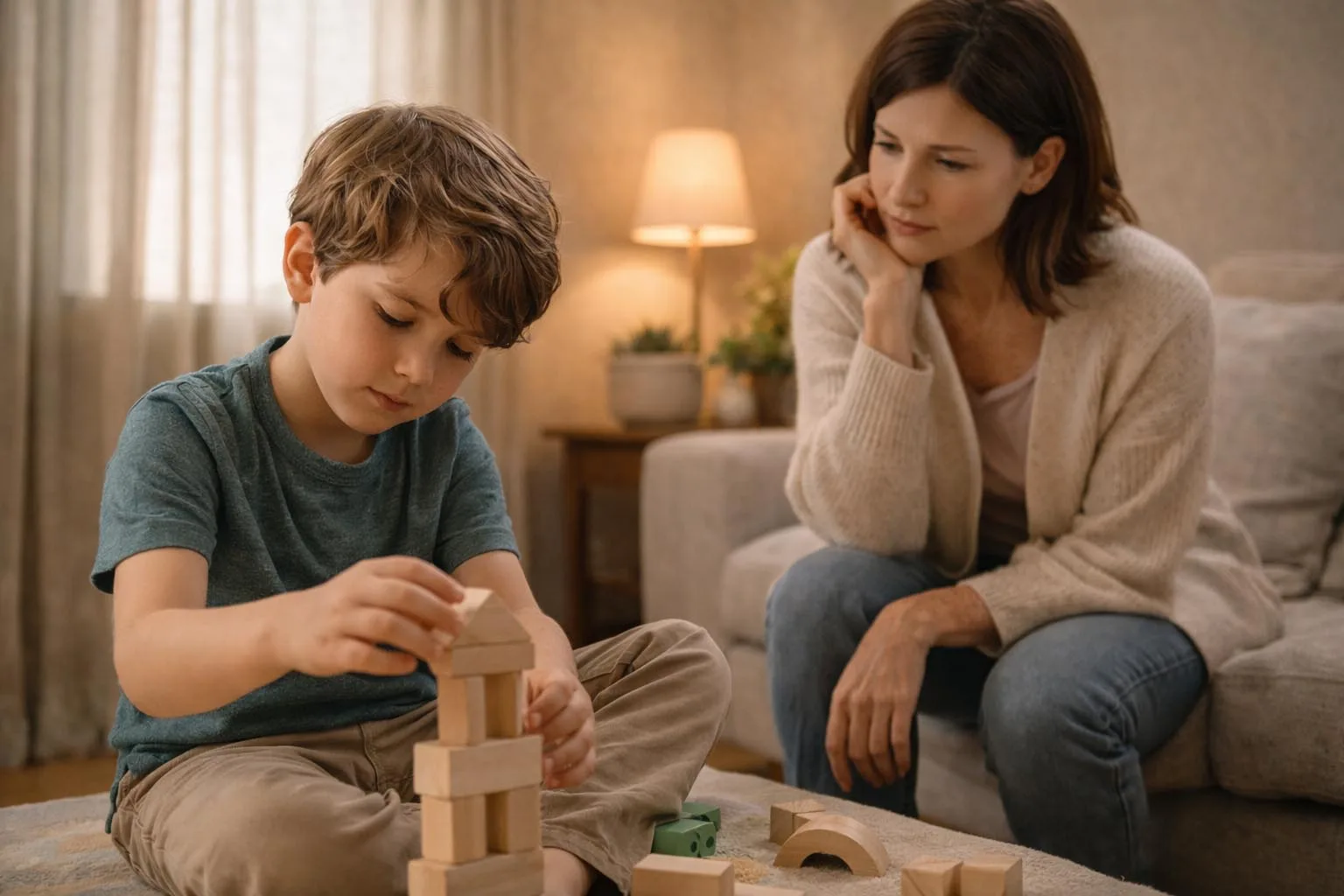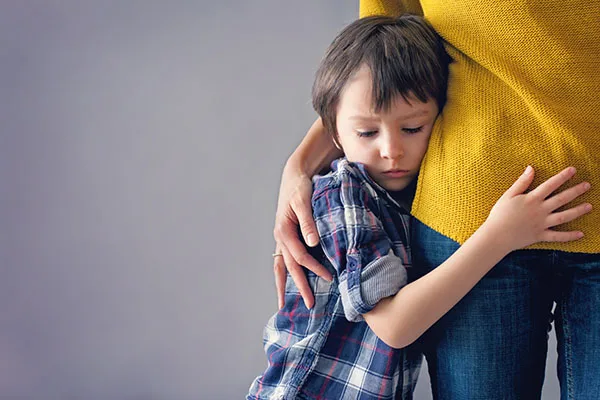
You have just told your child that someone they love has died. And now they are doing something that makes no sense for the moment: asking for a snack, playing with a toy, or talking about something that happened at school. You are standing there thinking, Do they even understand what I just said?
In my twenty-plus years working as a child and family therapist, I can assure you: they do understand. Usually more than we think. They just do not grieve the way we expect adults to. And that gap between how a child actually processes loss and how we think they should is where a lot of families get stuck.
If you are reading this because your child is hurting and you are not sure how to help, I want you to hear something first. Your child does not need to grieve "correctly." They need to grieve safely. That is what grief therapy is really about.
Kids grieve in ways that confuse us
A four-year-old whose grandfather died last week asks, "When is Papa coming to my birthday?" She was at the funeral. She heard the words. But the permanence of death is beyond what a preschooler's brain can hold. She is not in denial. She is four. Her grief will come out sideways: maybe she starts wetting the bed again, or she becomes terrified of the dark for the first time, or she cries at preschool drop-off even though she never did before. These are not random problems. They are grief.
School-age kids, maybe six to twelve, understand death more concretely, but they get stuck on the logistics. They want to know exactly how someone died, what happens to the body, whether it hurt. Some of them become convinced it was their fault. Kids this age also show grief in their bodies: stomachaches before school, headaches in the afternoon, trouble sleeping.
Teenagers understand loss the way we do, intellectually, but they are processing it through the chaos of adolescence. A grieving fifteen-year-old might look angry instead of sad. They might start skipping class or picking fights. The push for independence makes it harder for teens to accept help, especially from us. Many teens I work with sit in silence for the first few sessions before they finally let their guard down. That is normal for the age.
It is not just about death
Here is the thing about grief that we often miss: children grieve all kinds of losses, not just death.
The death of a pet is often a child's first real experience with loss. "It was just a dog" is something well meaning relatives say, but for a child who slept with that dog every night and told it their secrets, the loss is enormous. How the adults around them respond to that grief teaches the child whether their feelings are allowed or not.
Divorce is another form of grief that gets underestimated. Even in the most amicable splits, kids are losing the family they knew. Our guide on helping your child cope with the loss of a loved one goes deeper into this, but the short version is: children grieve the structure, not just the person. The house they grew up in, the routine of seeing both parents every day, the feeling that their world was stable.
Moves, school changes, the end of a close friendship. At fifteen, your best friend is your whole world. Losing that is not being dramatic. It is real grief.
When to ask for professional help
Some amount of sadness and disruption after a loss is expected and healthy. What matters is when it does not ease up. A few weeks of sleeping badly after a grandparent dies is normal. Three months of nightmares is a signal that they need more support.
Signs it is time to reach out to a professional:
- Persistent behavior changes that are still going strong a month or more after the loss.
- Academic drops with no other clear explanation.
- Social withdrawal, where a previously social child pulls away from everyone.
- Physical complaints (stomachaches, headaches) that a pediatrician cannot explain.
- Regression in younger kids, such as bedwetting or extreme clinginess.
- In teens: isolation, explosive anger, or any talk of wanting to hurt themselves.
A note on the child who looks "fine": Some children become very good at performing "okay." They keep their grades up and smile at family dinners while falling apart inside. They do this to protect the adults around them, or because no one ever explicitly told them it was safe to not be okay. A child who is coping too well after a major loss sometimes needs more support than a child who is clearly struggling. Our article on signs your child may need therapy can help you sort through what you are seeing.
What grief therapy actually looks like
With younger children, therapy looks like play. A sandtray, art supplies, dolls, figurines. A six-year-old who cannot say she is scared of dying like her mother did might build a scene where a baby animal gets separated from its family. That is her telling us. The therapist's job is to pay attention and gently guide the play so she can work through feelings she does not have language for yet.
With older kids and teens, sessions are more conversational, but the therapist follows their lead. Sometimes a teenager needs to talk about music or school for weeks before the real conversation opens up on its own. Memory books, art projects, letter-writing to the person who died, creating rituals: these are all tools that get shaped around who the child is and what they need.
Family sessions are often an important part of the process. When one family member is grieving differently than the others, it can create tension. Working on that dynamic together makes a real difference.
What you can do at home
Therapy is one piece of the puzzle. What happens at home matters just as much.
Be honest, but age-appropriate. Avoid euphemisms like "Grandma went to sleep" or "we lost Uncle David." Young children take those literally, creating confusion and sometimes fear of going to sleep themselves. Simple, truthful language is better: "Grandma's body stopped working, and she died."
Let all the feelings in. Kids sometimes laugh at a funeral or want to go play right after hearing terrible news. That does not mean they don't care; it means they are kids.
Keep the routine going. Same bedtime, same morning routine, same after-school snack. When a child's world has been shaken, predictable routines act as the glue that holds them together.
Let them see you grieve. You do not need to fall apart in front of them, but it is deeply healthy for children to see that sadness is a normal part of being human, not something shameful to hide.
There is no timeline for grief. Your child may seem fine for months and then fall apart on the person's birthday or a random Tuesday in March. That is not a setback; that is how grief works. It moves in waves. The goal is not to make the grief go away, but to make sure our children know how to ride those waves, and that they never have to do it alone.
In person and virtual sessions available
If your child is struggling after a loss and you are not sure what to do next, I am here to help. You can fill out the contact form below or call me at 818-403-5439. I work with grieving children and teenagers at my Agoura Hills office and virtually anywhere in California.
If you need support right now. If you or someone you know is in crisis or thinking about self-harm, call or text 988 to reach the Suicide & Crisis Lifeline, or text HOME to 741741 for the Crisis Text Line. Both are free and available 24 hours a day. Call 911 if someone is in immediate danger.
This article is for general education and support. It is not medical or mental health advice, diagnosis, or treatment, and reading it does not create a therapist-client relationship. If something here sounds familiar, talking with a licensed therapist can help.

See these articles in your Google feed
Add this site as a preferred source and new posts surface for you first.