You know the shift. It is the heavy silence on the drive home from school that used to be filled with chatter. It is the bedtime routine that has spiraled from a sweet ritual into an hour long negotiation. Maybe it is a sharpening of your teenager's mood that no longer feels like "just a phase," but something deeper and more urgent.
As a parent, you feel this change in your gut long before you can put a name to it. And underneath it, there is this question on a loop: Is this normal, or is something really wrong?
In my 20+ years working with children and families, including supporting kids through complex trauma at the UCLA Rape Treatment Center, I have learned that the parents who come to me usually noticed something was off long before they made the call. That instinct is your most powerful tool. The fact that you are paying attention tells me a lot about the kind of parent you are. We do not ask that question unless we care deeply. So let's start there.
When behavior is the message
Here is the thing about kids: they do not come to us and say "I have been feeling anxious lately" or "I think I am depressed." They show us through what they do. A seven year-old who used to run into school without looking back now clings to your leg at drop off. A ten year-old who loved basketball suddenly says it is "boring" and will not go to practice. A usually easygoing kid starts picking fights with a sibling over nothing.
When a child drops an activity or friend group they were genuinely excited about, it often points to something going on underneath. It could be anxiety, depression, bullying, or something at home that has shifted. The withdrawal itself is the clue.
And then there is anger. Some defiance is completely normal. A four year-old who says "no" to everything is on schedule. But when a spilled cup of juice leads to a thirty minute meltdown, or a twelve year-old is punching walls, that anger is usually covering something softer. Fear, sadness, feeling out of control. Anger just feels less scary to a kid than vulnerability does.
Regression is another clear signal. A potty trained child wetting the bed again. A child who had been sleeping in their own room suddenly unable to fall asleep without a parent next to them. The mind is trying to get back to a time that felt safer. This often shows up after divorces, moves, or traumatic experiences, but it can also appear with subtler shifts that we might not even realize our child noticed.
The quieter signs we tend to miss
We usually notice the behavioral stuff first because it is loud. But the quieter things matter just as much.
Sadness that will not lift. Every kid has bad days. What is worth paying attention to is when a child cannot seem to get back to baseline. Weeks go by and they are still flat, still saying things like "nobody likes me" or "what's the point." Those words can be windows into how our kids are truly feeling.
Worry that takes over. Being nervous before a big test is normal. Refusing to go to school every morning because of a stomachache that has no medical explanation is not. Kids with anxiety often show it physically first: headaches, nausea, trouble sleeping, asking the same reassurance question five times in a row. Our guide on helping your child cope with anxiety goes deeper into what to look for.
Meltdowns that do not match the trigger. All kids are still learning to manage their emotions, so some big reactions are expected. But if your child is having daily meltdowns that take forty-five minutes to come down from, that is beyond typical. They may need help building skills they have not developed on their own yet.
What this looks like at different ages
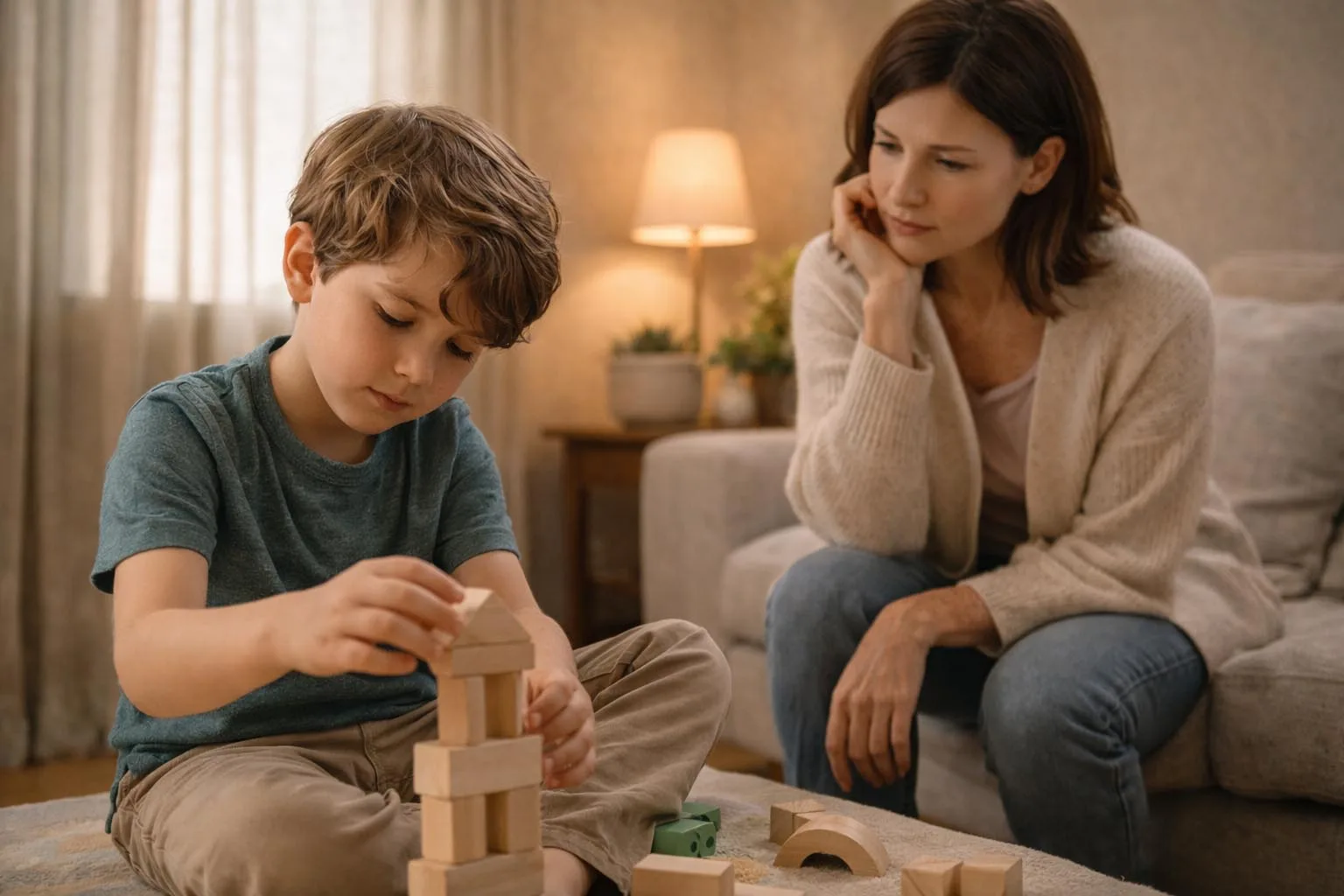
With little ones, ages three to five, almost everything comes out through behavior and play. Regression in potty training, new fears, nightmares, unusual aggression, play that keeps reenacting the same stressful scene over and over. With kids this young, therapy does not look like sitting in a chair and talking. It looks like playing. A child who cannot explain why they are scared might draw a picture that makes it completely clear.
School-age kids, six to twelve, are the ones where teachers often notice things first. Watch for signs like these:
- Academic changes: Grades drop, or they stop raising their hand in class.
- Social conflicts: They get into playground arguments that are new or out of character.
- Physical complaints: Stomachaches on school mornings that the pediatrician cannot explain.
- Friendship struggles: Trouble making or keeping friends when that was not an issue before.
- Sleep problems: Difficulty falling asleep, staying asleep, or nightmares.
- Negative self talk: Statements like "I am so stupid" or "everything is my fault."
Teenagers are tricky because adolescence is already a rollercoaster. The signs that matter are the ones that represent a real change from who that kid has been:
- New peer group: A whole new friend group with no explanation.
- Persistent mood shifts: Mood changes lasting longer than a couple of weeks.
- Loss of interest: Dropping activities they genuinely cared about.
- Withdrawal from family: Shutting down communication with the family entirely.
If several of these are happening at once, it is worth looking into depression therapy or anxiety therapy. You do not have to be sure it is clinical depression to make that call.
When the body is talking
This one comes up so often that it is worth its own section. Kids who are carrying emotional pain frequently show up at the pediatrician instead of a therapist. Stomachaches before school. Headaches every afternoon. The doctor runs tests, everything comes back normal, and we are left wondering what is going on.
What is going on is that our child's body is doing what their words cannot. Stress and anxiety live in the body, and kids who do not have the language or the permission to say "I am scared" or "I am sad" will often feel it physically instead. Once the pediatrician has cleared medical causes, it is a good time to talk to a therapist.
What therapy actually looks like for kids
Many parents I work with picture their child lying on a couch talking about their feelings. That is not how it works, especially with younger kids. With children under about ten, therapy uses a lot of play, art, and storytelling. Kids will tell you everything you need to know if you give them the right medium.
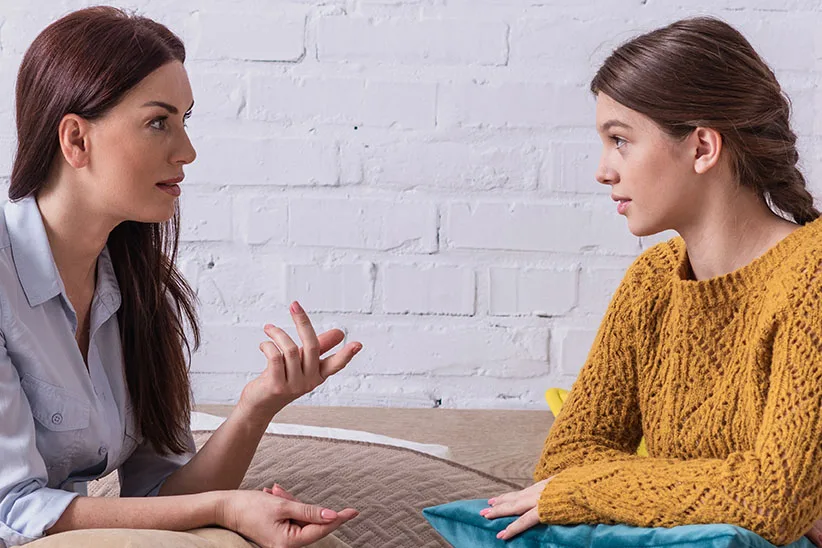
With teens, sessions look more conversational, but the therapist follows their lead. Sometimes a teenager needs to sit in silence for ten minutes before they are ready to say anything. That is fine. The relationship is the therapy. Once a kid trusts the person across from them, the real work can happen.
Family sessions are often part of the picture too. Working on what happens at home is just as important as what happens in the therapy room.
How to bring it up with your child
For a younger child, something like "You are going to meet someone who helps kids with their worries, and you will get to play and talk" is usually enough. For a teenager, it helps to be more direct: "I have noticed you seem like you are having a tough time, and I want to get you some support. This is not about being in trouble."
If they push back, let them. Acknowledge that it feels weird or scary. Do not force enthusiasm. Most kids warm up within a session or two once they realize the space is actually theirs.
Trust what you are seeing
You do not need to wait for a crisis to reach out. Families who get help early tend to have much smoother paths than the ones who wait until things are really falling apart. If your gut is telling you something is off, that is enough of a reason to make a call.
If your child is talking about wanting to hurt themselves, saying they wish they were dead, or showing signs of abuse or trauma, please do not wait. Reach out to a professional right away.
Figuring out whether your child needs help is one of the harder calls we make as parents. We do not need to get it perfect. We just need to pay attention and be willing to ask the question.
In person and virtual sessions available
If you are wondering whether your child could use some support, I am happy to talk it through with you. You can fill out the contact form below or call me at 818-403-5439. I work with kids, teens, and families at my Agoura Hills office and virtually anywhere in California.
If you need support right now. If you or someone you know is in crisis or thinking about self-harm, call or text 988 to reach the Suicide & Crisis Lifeline, or text HOME to 741741 for the Crisis Text Line. Both are free and available 24 hours a day. Call 911 if someone is in immediate danger.
This article is for general education and support. It is not medical or mental health advice, diagnosis, or treatment, and reading it does not create a therapist-client relationship. If something here sounds familiar, talking with a licensed therapist can help.

See these articles in your Google feed
Add this site as a preferred source and new posts surface for you first.