You have finally decided to try therapy. That alone took something. But now you are staring at a screen full of names, credentials, and stock photos, scrolling through page after page of a directory, and the search itself is starting to feel like its own source of stress. You just want someone who gets it, but you have no idea how to tell who that is from a headshot and a paragraph.
In my 20+ years as a therapist serving the Agoura Hills and Conejo Valley communities, I have heard from many clients that the search almost kept them from starting. So here is what I think actually matters when choosing someone to work with, and what you can safely ignore.
Making sense of the credentials
The alphabet soup after a therapist's name can be confusing. Here is a quick breakdown of the most common types you will see in our area:
- LMFT (Licensed Marriage and Family Therapist): Trained to work with individuals, children, teens, and families through the lens of relationships and family systems. Often a strong choice when therapy is for a child, teenager, or family, or when the concerns involve co-parenting, divorce, or family conflict. LMFTs in California hold a master's degree and have completed at least 3,000 hours of supervised clinical experience.
- LCSW (Licensed Clinical Social Worker): Holds a master's in social work and is trained in therapy as well as connecting clients with community resources. Can be a good fit when broader support services are part of the picture.
- LPCC (Licensed Professional Clinical Counselor): Holds a master's in counseling. Trained to work with individuals and groups across a wide range of mental health concerns.
- Psychologist (PhD or PsyD): Holds a doctoral degree. Can provide therapy and also conduct psychological testing and assessment, which matters if you suspect a learning disability, ADHD, or autism spectrum disorder.
- Psychiatrist (MD): A medical doctor who specializes in mental health and can prescribe medication. Many focus primarily on medication management rather than talk therapy.
Specialization matters more than most people realize
A therapist who is great with adults dealing with workplace stress may not be the right fit for a seven year-old with anxiety. The specific experience a therapist has with your particular concern makes a real difference.
Some specializations to look for depending on your situation:
- Child therapy: Look for someone trained in play therapy, art therapy, or sand tray therapy. Working with kids requires specific skills beyond general therapy training.
- Teen therapy: Adolescents have their own developmental world. A therapist experienced with teens understands identity development, peer dynamics, social media pressures, and the push toward independence.
- Family therapy: When family dynamics are part of what is going on, look for someone trained in family systems who can work with multiple members together.
- Trauma therapy: If you or your child has experienced trauma, including sexual abuse, look for specialized training like EMDR or TF-CBT.
- Anxiety and depression: Most therapists treat these, but some have deep experience with evidence-based approaches like CBT or ACT.
Questions worth asking in a phone consultation
Most therapists offer a brief phone call before the first session. Use it. This is not just logistics. It is your chance to get a feel for the person.
About their experience:
- What is your experience working with [your specific concern]?
- What therapeutic approaches do you use?
- How do you typically work with children/teens/families?
- How do you involve parents in a child's therapy?
About logistics:
- What are your session fees?
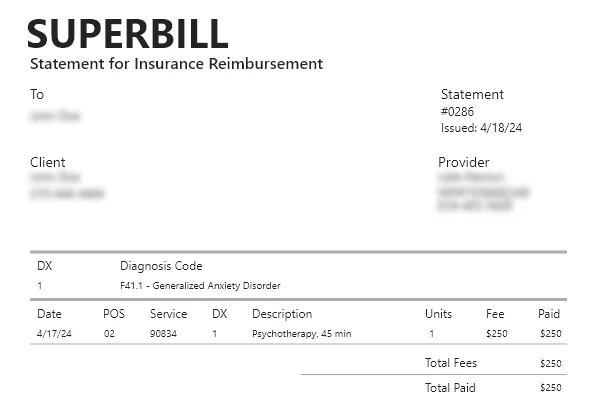
- Do you accept insurance, or do you provide superbills for out-of-network reimbursement?
- Do you offer both in-person and virtual sessions?
- What is your cancellation policy?
About the relationship:
- How do you handle it when a client feels the therapy is not working?
- How will we measure progress?
- How do you handle confidentiality with minors?
Pay attention not just to the answers but to how the conversation feels. Do you feel heard? Does this person seem warm, genuine, and interested? Even a brief phone call tells you a lot about whether you or your child can open up to this person.
In person versus virtual therapy
Both work. The best choice depends on your family's life right now.
In person therapy offers a dedicated space away from home, stronger nonverbal communication, and access to tools like art supplies and sand trays that are especially useful with younger children.
Virtual therapy saves commute time, works well for busy families juggling school and activities, and can feel more comfortable for some teens who open up more easily from their own space.
Many therapists in the Conejo Valley, including those in Agoura Hills, Westlake Village, and Thousand Oaks, offer both so families can choose what works best or move between the two as needed.
Understanding the cost
Therapy is an investment, and understanding how payment works ahead of time can save a lot of stress.
- In-network insurance: Some therapists accept insurance directly. Check with your provider for in-network options, though your choices may be more limited in terms of specialization.
- Out-of-network with superbills: Many therapists in the Agoura Hills, Calabasas, and Westlake Village area offer superbills, which are detailed receipts you submit to your insurance for partial reimbursement. This gives you more freedom to choose the best fit while still getting some insurance support.
- Private pay: Paying out of pocket offers complete privacy (no diagnosis required for insurance filing) and full freedom in choosing a provider. Some therapists offer sliding scale fees.
Where to start your search
If you are looking for a therapist in Agoura Hills, Westlake Village, Thousand Oaks, Oak Park, Calabasas, Woodland Hills, or Simi Valley, a few good starting points:
- Psychology Today directory: Lets you filter by location, specialization, insurance, and more
- Your pediatrician or family doctor: Often has a trusted referral list for children, teens, and families
- School counselors: May know local therapists who work specifically with kids and teens
- Word of mouth: Personal recommendations from friends, family, or other parents in the community can be valuable
- Professional organizations: CAMFT (California Association of Marriage and Family Therapists) maintains a directory of licensed providers
Red flags to watch for
Most therapists are caring, ethical professionals. But it is worth knowing the signs that someone may not be the right fit:
- They seem distracted or uninterested during sessions
- They push you to share more than you are ready for
- They tell you what to do rather than helping you think things through
- They are vague about fees, policies, or boundaries
- They break confidentiality without a legal or safety reason
- You consistently feel worse after sessions with no sense of movement
Trust your instincts. If something does not feel right, it is okay to bring it up or to try someone else. The goal is to find a person with whom you feel safe, understood, and supported.
Why the right fit matters so much
Research suggests that the quality of the relationship between therapist and client is one of the strongest predictors of good outcomes. That means who your therapist is, and how you connect with them, matters just as much as the specific techniques they use.
When the fit is right, therapy becomes a space where real change can happen. You feel comfortable being honest. You trust that your therapist gets your situation. And you start to feel like the work is actually making a difference.
If you are looking for a therapist for yourself, your child, or your family and want to talk about whether we might be a good fit, I am here. Contact me through the form below or call 818-403-5439. I see clients in person at my Agoura Hills office and virtually anywhere in California, including Westlake Village, Oak Park, Calabasas, Thousand Oaks, Woodland Hills, and Simi Valley.
If you need support right now. If you or someone you know is in crisis or thinking about self-harm, call or text 988 to reach the Suicide & Crisis Lifeline, or text HOME to 741741 for the Crisis Text Line. Both are free and available 24 hours a day. Call 911 if someone is in immediate danger.
This article is for general education and support. It is not medical or mental health advice, diagnosis, or treatment, and reading it does not create a therapist-client relationship. If something here sounds familiar, talking with a licensed therapist can help.
See these articles in your Google feed
Add this site as a preferred source and new posts surface for you first.