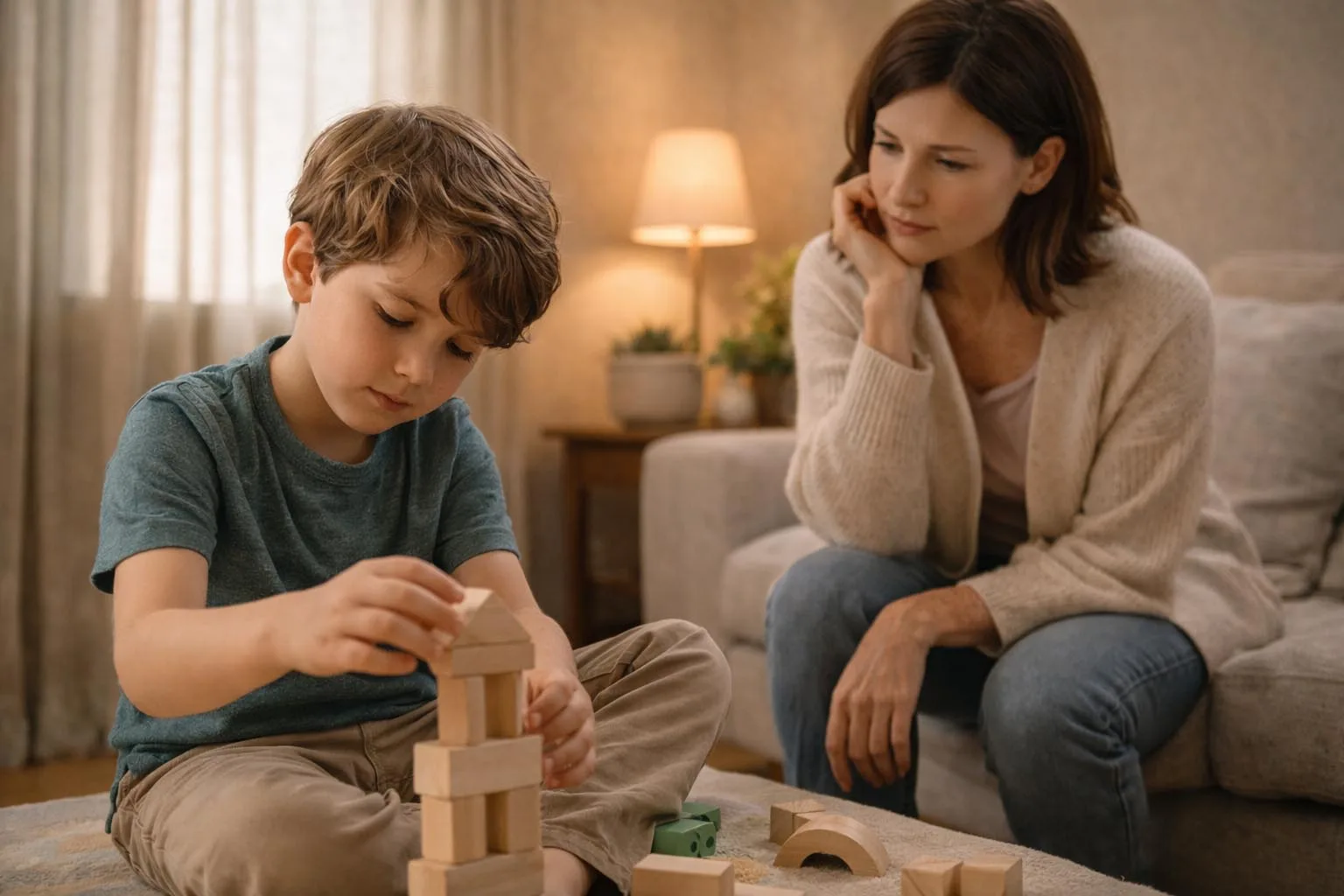
"I'm stupid." "Nobody likes me." "I can't do anything right."
When your child says these things, it lands in a place that is hard to describe. You want to fix it. You want to tell them all the reasons they are wonderful. But sometimes the reassurance does not seem to stick.
In my twenty-plus years working with children and families, I have seen how deeply a child's self image shapes everything else: their willingness to try new things, their ability to handle setbacks, how they treat other people, and whether they ask for help when they need it. The good news is that self esteem is not something a child is born with or without. It is something we can build together, one interaction at a time.
What healthy self esteem actually looks like
It is not about thinking you are the best at everything. It is not about constant praise or never feeling bad. Healthy self esteem means a child has a realistic, generally positive sense of who they are. They believe they are capable, that they matter, and that they can handle hard things even when those things do not go perfectly.
That belief gets built through experience and through the messages kids absorb from the people closest to them. Every time we respond to a child's success, failure, or big feeling, we are shaping the answer to their deepest questions: Am I good enough? Am I lovable? Can I do hard things?
Signs your child may be struggling
Low self esteem does not always look the way we expect. Some patterns worth paying attention to:
- Avoiding new things: "I can't do it" or "I'm going to fail" before even trying
- Giving up quickly: Walking away at the first sign of difficulty
- Negative self talk: "I'm the worst at everything" as a regular refrain
- Constant need for reassurance: "Is this right?" "Do you still love me?"
- Unfavorable comparisons: Focusing on what other kids can do that they cannot
- Rejecting compliments: Dismissing or arguing with positive feedback
- Perfectionism: Extreme distress over small mistakes
- Social withdrawal: Avoiding playdates or group activities because they feel they do not belong
- Physical complaints: Stomachaches or headaches tied to situations where they feel judged
- Acting out: Defiance or irritability can sometimes be a child's way of saying they feel bad about themselves
Praise the effort, not just the outcome
This is one of the most powerful shifts we can make as parents. Instead of "You're so smart," try "You worked really hard on that and it shows." Instead of "You're the best player on the team," try "I could see how much you were pushing yourself out there."
When kids are praised only for being smart or talented, they start to avoid challenges because struggling feels like proof they are not actually smart. When they are praised for effort, persistence, and problem solving, they learn that hard work matters and that setbacks are a normal part of learning.
Let them struggle (within reason)
It is so tempting to jump in and fix things. But stepping in too quickly sends a quiet message: I do not think you can handle this.
When your child is stuck on a puzzle, working through a social conflict, or frustrated with homework, try sitting with them through the discomfort instead of solving it for them. "This is a tough one. What have you tried so far?" or "I can see you're frustrated. What could you do next?"
When they figure it out themselves, the confidence that comes from that is something no amount of parental reassurance can replace.
Give them real responsibilities
Kids build self esteem when they feel they are contributing something that matters. Setting the table, feeding the dog, watering the garden, helping with laundry. These are not chores for the sake of chores. They are ways of saying: I trust you. You are capable. Your contribution matters to this family.
And when the table is set a little crooked? That is a small price for a child who feels competent and valued.
Watch your own self talk
Kids are always listening. If they hear us say "I'm so dumb" or "I look terrible" or "I can't do anything right," they absorb the message that this is how people are supposed to talk to themselves.
We do not have to pretend to be perfect. But we can let them see us handle mistakes with grace: "Well, that didn't go as planned. Let me think about what I can do differently next time." That teaches more about self esteem than any pep talk ever could.
Create chances for mastery
Help your child find something they can get better at over time. Not better than everyone else. Just better than they were before. A child who goes from struggling to read simple words to finishing their first chapter book has experienced mastery. A child who learns to ride a bike after many falls has experienced mastery.
These moments build a deep, lasting sense of "I can do hard things."
Validate their feelings instead of minimizing them
When your child is upset, it can be tempting to say "It's not a big deal" or "You're fine." Those responses are usually well meaning, but they can teach a child that their emotions are wrong or unimportant.
Try: "It sounds like that really hurt your feelings" or "I can see you're really disappointed." Validation does not mean agreeing that the situation is as terrible as they think it is. It means letting them know their feelings make sense. Children who learn their emotions are acceptable develop a healthier relationship with themselves.
Skip the comparisons
"Your sister never had trouble with this." "When I was your age, I could already do that."
Even when these are meant to motivate, they land as: you are not enough. Focus on your child's individual journey. Celebrate their unique strengths. Every child develops at their own pace.
How self esteem shifts with age
Preschool (ages 3-5): Self esteem at this age is closely tied to feeling loved and secure. Let them make simple choices, celebrate their efforts at new skills, and offer lots of warm encouragement.
School-age (ages 6-12): The world expands and comparisons start. Academic performance, social standing, and physical appearance all begin to matter. This is when effort-based praise and a growth mindset become especially valuable.
Teens (ages 13-18): Hormones, social media, peer pressure, and the search for identity create a complicated landscape. Stay connected without being intrusive. Show interest without interrogating. And keep communicating that your love is unconditional, not tied to grades, appearance, or achievements.
When outside support can help
All kids doubt themselves sometimes. But persistent low self esteem that gets in the way of daily life may benefit from working with a child therapist. Consider reaching out if your child:
- Consistently refuses to try new things or has dropped activities they used to enjoy
- Makes frequent, extreme negative statements about themselves
- Has become increasingly withdrawn or sad
- Is dealing with anxiety or depression connected to how they see themselves
- Has been through a major life change that seems to have shaken their confidence
- Is being bullied and the situation is not getting better
- Shows signs of self harm or talks about not wanting to be alive
Therapy can help a child challenge the negative beliefs they carry about themselves, build healthier thinking patterns, and strengthen the parent-child relationship. Family therapy can also be valuable when family dynamics are playing a role.
If you are concerned about your child's self esteem, or if you want guidance on building confidence and resilience in your child, I am here. Contact me through the form below or call 818-403-5439. I see clients in person at my Agoura Hills office and virtually anywhere in California, including Westlake Village, Oak Park, Calabasas, Thousand Oaks, Woodland Hills, and Simi Valley.
If you need support right now. If you or someone you know is in crisis or thinking about self-harm, call or text 988 to reach the Suicide & Crisis Lifeline, or text HOME to 741741 for the Crisis Text Line. Both are free and available 24 hours a day. Call 911 if someone is in immediate danger.
This article is for general education and support. It is not medical or mental health advice, diagnosis, or treatment, and reading it does not create a therapist-client relationship. If something here sounds familiar, talking with a licensed therapist can help.

See these articles in your Google feed
Add this site as a preferred source and new posts surface for you first.