Child Divorce Counseling in Calabasas
Julie Klamon, LMFT - Child Divorce Counselor Near Calabasas
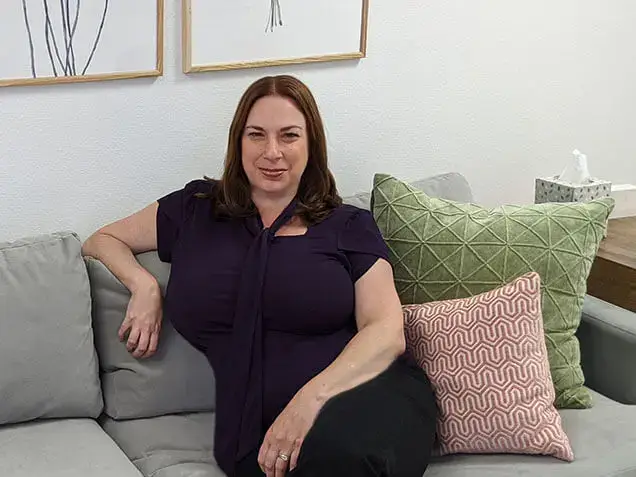
A divorce asks children to absorb a decision they had no say in, and most of them try to do it quietly. Parents often tell me their child took the news better than expected. Then a few months pass and the sleep goes, or the temper does, or a kid who liked school stops wanting to go. Counseling gives your child a place to be honest before that backlog gets any heavier.
I have practiced as a licensed marriage and family therapist for more than two decades (LMFT #37704), and a large share of that work has been with children living through a family separation. I see kids ages 8 and up. My Agoura Hills office is roughly ten minutes from Calabasas on the 101, and secure video sessions are available for children ages 10 and up anywhere in California.
If you are not certain your child needs this, that is a normal place to be starting from. A free phone consultation costs nothing and usually makes the answer clearer than any amount of reading will.
When Parents Usually Call
The calls tend to cluster around three moments. Right after telling the children. A few months in, when the novelty of two homes wears off and the reality sits down. And roughly a year later, when something everyone thought was settled comes back up, usually attached to a birthday, a holiday, or a new partner.
Any of those is a reasonable time to start, although earlier is generally easier, because the habits a child builds to cope are still loose enough to change. You do not need a crisis to justify the call. The sense that something is off, even without being able to name it, is a complete reason.
Divorce in a Community This Size

Calabasas is small enough that news moves. Families see each other at Saturday games, across a short list of Las Virgenes Unified campuses, and in the same handful of parking lots. When a family separates here, children generally assume everyone already knows, and they are usually right. Kids at A.E. Wright or Calabasas High notice who is suddenly being picked up by a grandparent.
That changes the shape of what your child worries about. It is not only the divorce. It is being the kid whose parents got divorced. I hear a lot about the work of looking normal, about sidestepping a friend's perfectly ordinary question, about a child who will not have anyone over because they do not want to explain the second place.
Staying in the same small community also sharpens loyalty binds. When both parents attend the same events and know the same families, children spend real energy deciding which side of the field to sit on and which parent is safe to mention. Left alone, most kids solve that by quietly shrinking their own life until the problem stops coming up. That is the pattern I most want to interrupt.
How Sessions Work
I meet with parents first. That session covers the history, how time is currently split, and what each of you is worried about, so your child is never the one explaining the family to a stranger.
With children, most of the movement happens sideways. We draw, we play, we tell stories about other families who happen to have the same problem, and somewhere in there the actual thing comes out. Children this age understand far more than they can fit into a sentence, and pressing for the sentence tends to close the door.
Within the first few weeks, nearly every child asks some version of the same question: whether they caused it. What matters is less the answer than who is sitting there when they finally ask. From that point the work turns practical. Naming a feeling before it becomes a slammed door. Asking each parent for what they need at that house. Handling questions from friends. Building a version of their family story they can carry into being a teenager without flinching. There is more on the general approach on my child divorce counseling page.
Parent check-ins are built into the process. I keep your child's confidence about the details and still make sure you know what I am seeing and what would help at home. When the conflict between households is the bigger driver, we may also talk about whether co-parenting therapy belongs alongside your child's work.
What Parents Notice Changing
Progress here is rarely dramatic. It shows up in small, specific ways, and usually the people at home spot it before I do.
- Transitions between homes stop being a fight, and the handoff turns back into an ordinary part of the week.
- Your child stops carrying the blame, or at least stops carrying it alone.
- Feelings arrive with words attached instead of arriving as a slammed door or a stomachache. Learn more about anxiety therapy.
- School stops being where everything leaks out. Mornings get easier and the requests to stay home taper off.
- Your child asks for things directly, from both of you, instead of hinting and hoping.
- Friendships open back up, because keeping the secret was most of what was in the way. Learn more about child therapy and teen therapy.
Who I Work With
Children Ages 8 and Up
Old enough to use the work, young enough that early support saves them years of guessing at what they are feeling.
Kids Living in Two Homes
Children managing different rules, different bedrooms, and the quiet arithmetic of who to tell what.
Families Still in the Middle of It
Nothing has to be finalized. Some of the most useful work happens while the details are still being sorted out.
Frequently Asked Questions About Child Divorce Counseling in Calabasas
What age does a child need to be for divorce counseling?
I work with children ages 8 and up in person, and secure video sessions are available for children 10 and up. By around eight, most kids can use the tools this work relies on, including talking, drawing, and practicing a skill and then trying it out at home. For younger children I am glad to point you toward a play therapist who specializes in that age.
Should we wait until the divorce is final before starting?
Usually not. The stretch while everything is unsettled is often the hardest part for a child, because nothing has been decided and they are living inside the uncertainty without any say in it. Counseling during that period gives your child one steady hour a week while the rest of it is still moving.
My co-parent is unsure about therapy. Can my child still start?
When parents share legal custody, both generally need to consent before a child begins therapy, and your custody order may address how that decision gets made. Hesitation is often really a question about what happens in the room, and I am happy to answer that on a call. Read your order first and bring it up at the consultation.
Will my child be pushed to talk about things they are not ready for?
No. Pressure backfires with children and usually costs weeks. We start with whatever your child is willing to bring, which is often something unrelated, and the harder material arrives once the room feels safe enough to hold it. That is not a delay. It is how the work gets anywhere at all.
How do I explain counseling to my child without making it sound like a punishment?
Keep it short and ordinary. Something along the lines of: this is a person kids talk to when a lot is changing at home, and you do not have to fix anything or perform. Avoid framing it as a consequence for behavior, and avoid promising your child they will enjoy it. Most kids settle within a session or two once they see the room is theirs.
Is your office convenient to Calabasas?
Yes. My office at 28310 Roadside Dr. #249 in Agoura Hills is about ten minutes from Calabasas on the 101, which keeps after school appointments workable. Some parents also appreciate that it sits just outside their immediate community. Virtual sessions are available across California for children ages 10 and up.
In-Person and Virtual Therapy Options Available
My office is at 28310 Roadside Dr. #249, Agoura Hills, CA 91301, just off the 101 freeway. Along with Calabasas, I work with families from Hidden Hills, CA, Woodland Hills, CA, West Hills, CA, Malibu, CA, Westlake Village, CA, and Oak Park, CA. Virtual sessions are available anywhere in California for children ages 10 and up.
If the separation has been hard on your child, a short call is the simplest way to find out whether counseling would help. Schedule a free phone consultation and we can talk it through.