Families do not usually arrive in my office over one big blowup. More often it is the slow accumulation: the same argument on a loop, a teenager who has stopped talking, a child whose behavior shifted after a divorce, two households trying to stay on the same page. Everyone is doing their best, and somehow the connection has frayed anyway. That is what family therapy is for.
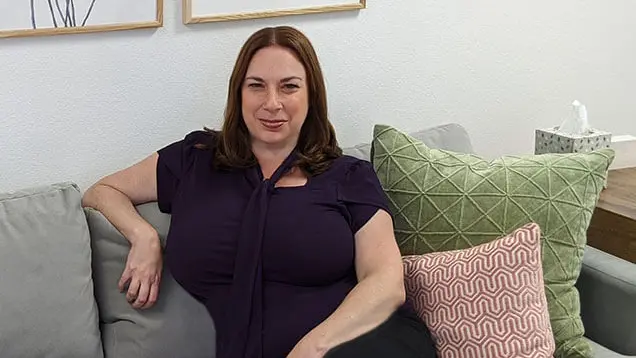
I am a licensed marriage and family therapist with more than 20 years of experience helping families repair how they relate to one another. The point is not to assign blame or pick a problem person. It is to understand the patterns the whole family has fallen into and change them together, so home feels less like a battleground and more like a place everyone can exhale.
My office is in Agoura Hills, about 10 minutes from Calabasas on the 101. I also offer secure video sessions across California when getting everyone together in person is hard to arrange.

Calabasas is a connected place. Families share schools across Las Virgenes Unified, run into each other at The Commons, and see the same faces on the sidelines of weekend games. That closeness has real warmth to it, and it also means family struggles can feel exposed. Parents tell me they worry about who knows what, especially during a separation, and about how their kids are managing it socially as well as at home.
There is also the quiet pressure of a high-achieving community, where success is visible and expectations run high. Kids absorb that, and it can show up as anxiety, perfectionism, or conflict that lands on the family. Working with families here, I keep the focus on what is happening inside your home rather than how it looks from outside. My office sits just beyond Calabasas in Agoura Hills, which gives families a private, separate setting for this work.
Divorce reshapes a family, and children feel it even when the adults try to shield them. Kids can come away confused, angry, or quietly convinced they caused it. A big part of my work is giving them a space to sort through those feelings, to understand that the separation is not their fault, and to learn ways to cope with a home that now looks different. When children have somewhere safe to put those emotions, they steady more quickly.
I also help parents build a co-parenting relationship that actually functions. That means clearer communication, fewer flare-ups, and consistency across two households on the things that matter. The biggest predictor of how well children adjust to divorce is not the divorce itself but how much conflict they witness between their parents afterward. That is something we can change, and it is some of the most worthwhile work a separated family can do.
I treat the family as a system rather than a collection of separate problems. We look at how each person's role and reactions feed the pattern, then practice new ways of listening, disagreeing, and repairing afterward. Sessions are honest but not a free-for-all. Everyone, including the kids, gets a turn to be heard, and I keep things from sliding into the same fight you have at home. You can read more about my general approach on my family therapy page.
Depending on what your family needs, I may meet with everyone together, with the parents, or with a child or teen on their own, then bring people back together. The aim throughout is the same: stronger bonds, clearer communication, and a household that can handle the hard stuff without coming apart.
We meet as a family, or sometimes in smaller groupings, to look at the patterns that keep causing friction and to change how you talk to one another. Sessions are practical. We work on communication, repair after conflict, and the specific issues bringing you in, whether that is parenting, a divorce, a blended family, or a teen who has gone quiet. The goal is a household that feels steadier for everyone in it.
A wide range. Common ones include constant conflict, communication that has broken down, parenting disagreements, behavioral changes in a child or teen, divorce and co-parenting, blending two families, grief and loss, and tension with extended family. If something keeps coming up at home and your usual ways of handling it are not working, family therapy can help.
Often, yes. Children and teens usually benefit from a place to say what they are feeling and be heard by the rest of the family. I use age-appropriate ways to draw them in so younger kids are not just sitting through an adult conversation. Sometimes I also meet with parents or a child separately when that is the right move.
Yes. A lot of my family work involves easing the impact of divorce on children and helping parents build a workable co-parenting relationship across two households. In a connected community like Calabasas, where families share schools and sports, lowering the conflict your children witness makes a real difference in how they cope.
My office in Agoura Hills is about 10 minutes from Calabasas on the 101, which makes it manageable to get the whole family there. Virtual sessions are also available across California when coordinating everyone's schedules in person is difficult.
My office in Agoura Hills, CA 91301 is a short drive from Calabasas for in person family therapy. I also work with families from the surrounding communities, including Hidden Hills, CA, Woodland Hills, CA, Agoura Hills, CA, Westlake Village, CA, Malibu, CA, and Oak Park, CA. Virtual therapy sessions are available to families located anywhere within the state of California.
If your family has been stuck in the same hard patterns, change is possible. Schedule a complimentary phone consultation and we can talk about what is going on and whether working together makes sense.
Offering Virtual And in person Sessions