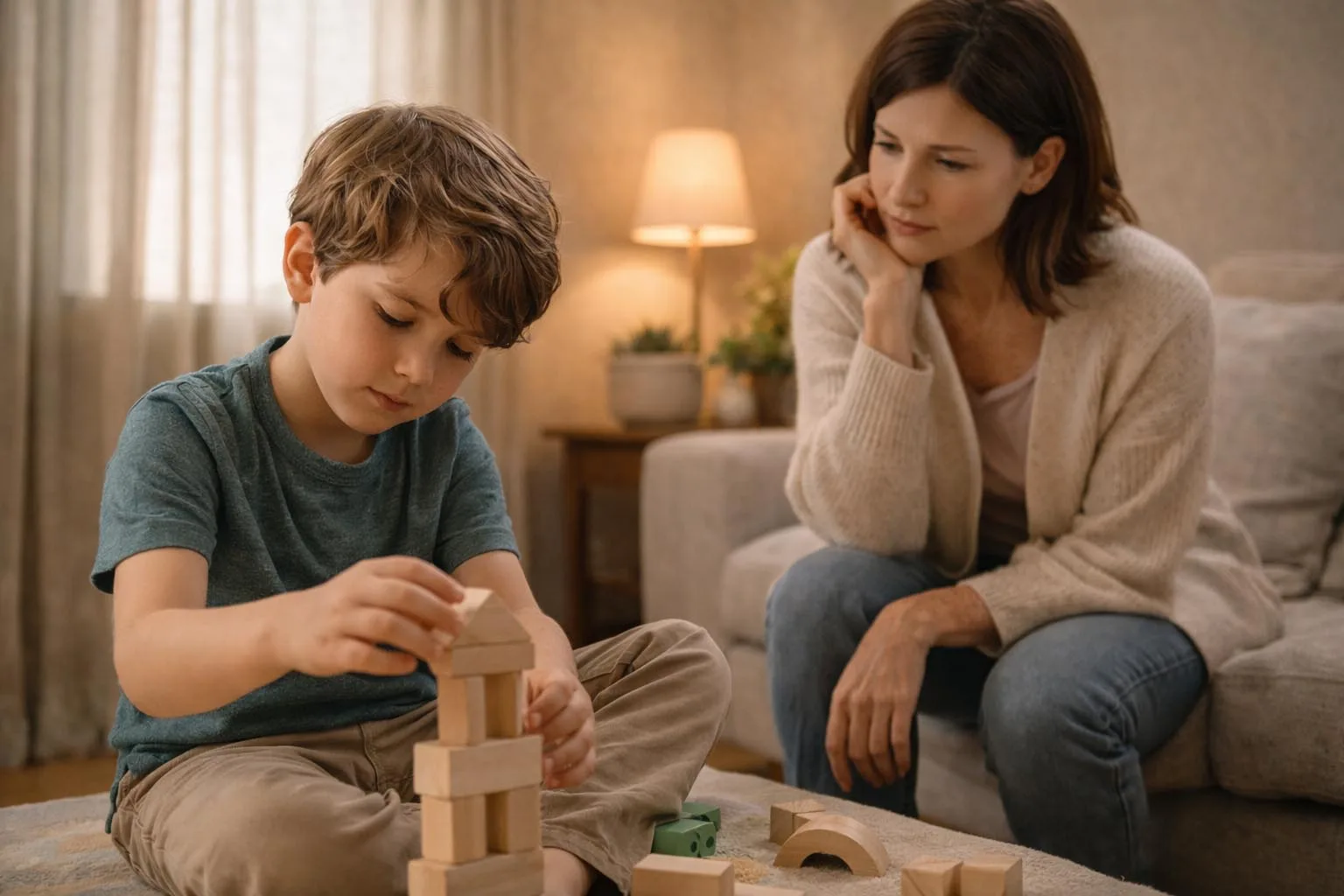
You remind them to brush their teeth. You make sure they eat something green at least a few times a week. You enforce bedtime even when they fight you on it. But when it comes to talking about feelings and mental health, most of us get stuck. We want to say the right thing, and that pressure to get it perfect can keep us from saying anything at all.
In my twenty-plus years as a therapist working with children and families, I have seen how much it matters when a parent simply opens the door to these conversations. It does not have to be a big, formal sit-down. The kids who do best emotionally are usually the ones who grew up hearing that all feelings are okay and that asking for help is something strong people do.
Children feel a full range of emotions from a very young age. They just need a little help making sense of what is happening inside them. When we talk about feelings openly at home, without shame or awkwardness, we give them something they will carry for the rest of their lives.
Why these conversations matter so much
Anxiety, depression, and behavioral struggles affect millions of young people. And the research is clear: early intervention changes outcomes. Kids who grow up in homes where emotions are acknowledged develop stronger coping skills and a greater willingness to ask for support when they need it.
Silence around mental health, even well meaning silence, can send a message. Kids are observant. When certain topics are off-limits, they may start to believe that struggling emotionally means something is wrong with them.
By making mental health a normal part of your family's conversations, you break down stigma before it takes root. And you do not need to be perfect at it. What matters most is that your child knows the door is always open.
How to start, age by age
The way you talk about mental health will shift as your child grows. Here is what tends to work at each stage.
Preschoolers (ages 3 to 5)
At this age, the goal is simple: help them name what they are feeling and learn that all feelings are normal.
- Use simple language. "It looks like you're feeling sad right now" or "Everyone feels angry sometimes, and that's okay."
- Read books about feelings. Picture books that explore emotions give young kids a way to see their experiences reflected back and open up natural conversation.
- Name your own emotions out loud. When you say "I'm feeling frustrated, so I'm going to take some deep breaths," you show them what healthy emotional awareness looks like in action.
- Validate instead of dismiss. Instead of "You're fine" or "Don't cry," try "I can see you're really upset. Do you want to tell me about it?"
Elementary school age (ages 6 to 10)
Kids at this age are building more complex friendships and may start comparing themselves to peers. They are ready for slightly deeper conversations.
- Introduce mental health as a concept. You might explain it as "Just like our bodies can feel sick or healthy, our minds and feelings can feel good or not so good. Taking care of our feelings matters just as much as taking care of our bodies."
- Ask open-ended questions. Instead of "Did you have a good day?" try "What was the best part of your day? Was there anything that was hard?"
- Talk about the brain. Many kids this age are fascinated by how their bodies work. Explaining that the brain handles feelings and sometimes needs extra care makes mental health feel concrete.
- Normalize getting help. Let your child know that just like we go to the doctor for our bodies, some people talk to a special helper when their feelings need attention. This plants the idea that therapy is a normal, healthy choice.
Tweens (ages 11 to 13)
The tween years bring huge changes. Kids at this stage understand mental health concepts but may feel self conscious discussing their own struggles.
- Be direct but gentle. Tweens appreciate honesty. Try something like "I know middle school can be really stressful. If you're ever feeling overwhelmed or down, I'm here to listen."
- Use side-by-side moments. Car rides, walks, and bedtime are often easier settings than face-to-face at the dinner table. Less eye contact can actually help tweens open up.
- Talk about what you see in media. If a character in a show is dealing with anxiety or depression, use it as a springboard. "What do you think about how that character handled things?"
- Respect their space while staying connected. Let them know you will not force them to talk, but that you are always available and will listen without judgment.
Teenagers (ages 14 to 18)
Teens are dealing with identity, academic pressure, social media, and growing independence. Mental health conversations at this age require a balance of openness and respect for their autonomy.
- Acknowledge their experience. Avoid "These are the best years of your life." Instead, validate that their challenges are real and meaningful.
- Share your own experiences when it feels right. Teens often respond well when parents are willing to be a little vulnerable. Sharing a time when you struggled can make the conversation feel less like a lecture.
- Make sure they know about resources. Crisis lines, school counselors, and therapy are tools, not punishments.
- Keep showing up even when they push back. Teens may insist they are fine. Continue checking in without being intrusive, and let them know you will be there when they are ready.
Making home a safe place to feel
The conversations only work if your child trusts that they can share without being judged, punished, or dismissed. Here is how to build that safety:
- Listen more than you speak. When your child opens up, resist the urge to immediately fix or advise. Sometimes they just need to feel heard.
- Manage your own reactions. If your child tells you something concerning, do your best to stay calm. A strong emotional reaction, even one coming from love, can make them less likely to share next time.
- Follow through on trust. If your child shares something personal, respect it. Do not bring it up in front of others or use it against them later.
- Make check-ins routine. When emotional conversations happen regularly rather than only during a crisis, they feel less intimidating for everyone.
What not to say
Even with the best intentions, certain phrases can shut things down. Here are some common ones to watch for:
- "You have nothing to be sad about." This dismisses your child's experience and teaches them that feelings need to be justified by circumstances.
- "Just think positive." While optimism has value, this minimizes what they are going through and implies their struggle is a choice.
- "Other kids have it so much worse." Comparing suffering does not reduce it. It makes kids feel guilty for having feelings at all.
- "You're being dramatic." What looks like overreaction to an adult may feel genuinely overwhelming to a child. This label discourages them from expressing what they feel.
- "I went through the same thing and I was fine." Your child is not you, and the world they are growing up in is different. This can feel dismissive rather than reassuring.
Instead, try responses that validate and invite more sharing: "That sounds really hard. Tell me more about what you're feeling." "I'm glad you told me. What do you think would help?" "It's okay to feel that way. I'm here for you."
When your child might need professional support
Open conversations at home are powerful. But sometimes kids need more support than we can provide on our own. It can be hard to know when everyday struggles have crossed into something that would benefit from professional help.
Consider reaching out to a therapist if you notice:
- Persistent mood or behavior changes lasting more than a couple of weeks
- Withdrawal from friends, family, or activities they used to enjoy
- Significant changes in eating or sleeping patterns
- Frequent physical complaints like headaches or stomachaches with no medical cause
- Difficulty functioning at school, socially, or at home
- Expressions of hopelessness, worthlessness, or talk about self harm
If you are unsure whether your child needs therapy, that uncertainty itself is a good enough reason to ask. A child therapist can help you figure out what is going on and what would help most. Parenting support is also available if you want guidance on supporting your child's emotional development at home.
Building emotional strength over time
Talking to your kids about mental health is not a one-time event. It is an ongoing conversation that grows as they do. The foundation you build now, through small, consistent moments of connection, gives them tools they will use for the rest of their lives.
- Model healthy coping. Let your children see you managing stress in constructive ways, whether that is exercise, talking to a friend, taking a break, or going to your own therapy.
- Celebrate emotional growth. When your child handles something hard or opens up about a tough day, acknowledge it. "I noticed how you calmed yourself down earlier. That took real strength."
- Teach problem solving alongside empathy. Help your child learn to identify what they are feeling, consider their options, and take action rather than feeling stuck.
- Stay curious. As your child grows, their emotional world gets more complex. Keep asking questions and be willing to learn alongside them.
You are not alone in wanting to get this right. The fact that you are reading this tells me you care deeply about your child's wellbeing, and that already matters more than you might realize. If you would like guidance on how to talk to your child about mental health, or if you are worried about how your child is doing emotionally, I am here. Contact me using the form below or call 818-403-5439. I see clients in person at my Agoura Hills office and virtually anywhere in California, including Westlake Village, Oak Park, Calabasas, Thousand Oaks, Woodland Hills, and Simi Valley.
If you need support right now. If you or someone you know is in crisis or thinking about self-harm, call or text 988 to reach the Suicide & Crisis Lifeline, or text HOME to 741741 for the Crisis Text Line. Both are free and available 24 hours a day. Call 911 if someone is in immediate danger.
This article is for general education and support. It is not medical or mental health advice, diagnosis, or treatment, and reading it does not create a therapist-client relationship. If something here sounds familiar, talking with a licensed therapist can help.

See these articles in your Google feed
Add this site as a preferred source and new posts surface for you first.